Businesses worldwide face a critical challenge: a pervasive shortage of skilled talent. This deficit hampers innovation, growth, and competitiveness across industries, particularly in the tech sector. The search for qualified professionals has become a global race, with demand far exceeding supply. This talent scarcity isn't confined to specific regions or roles; it's a widespread issue affecting diverse aspects of business operations. Companies of all sizes struggle daily with this hurdle as they aim to thrive in an increasingly competitive marketplace. Companies struggle to find and keep skilled professionals across various roles, from IT to business strategy. The shortage is most severe in advanced tech fields like AI, data science, and cybersecurity. This talent gap hinders innovation, product development, and operational efficiency. It also drives up labor costs as firms vie for scarce expertise, impacting profitability and long-term sustainability.
The effects of this deficit ripple through organizations, hampering their ability to adapt to market changes and maintain a competitive edge. The ongoing digital transformation of the global economy will only heighten the demand for skilled professionals. Solving this talent crisis is now a top priority for businesses, educators, and policymakers. Tackling this issue demands creative strategies for hiring, retaining, and developing talent. It also calls for joint efforts to narrow the skills gap through focused education and training programs.

Reasons on Why is it Hard to Find the Right People

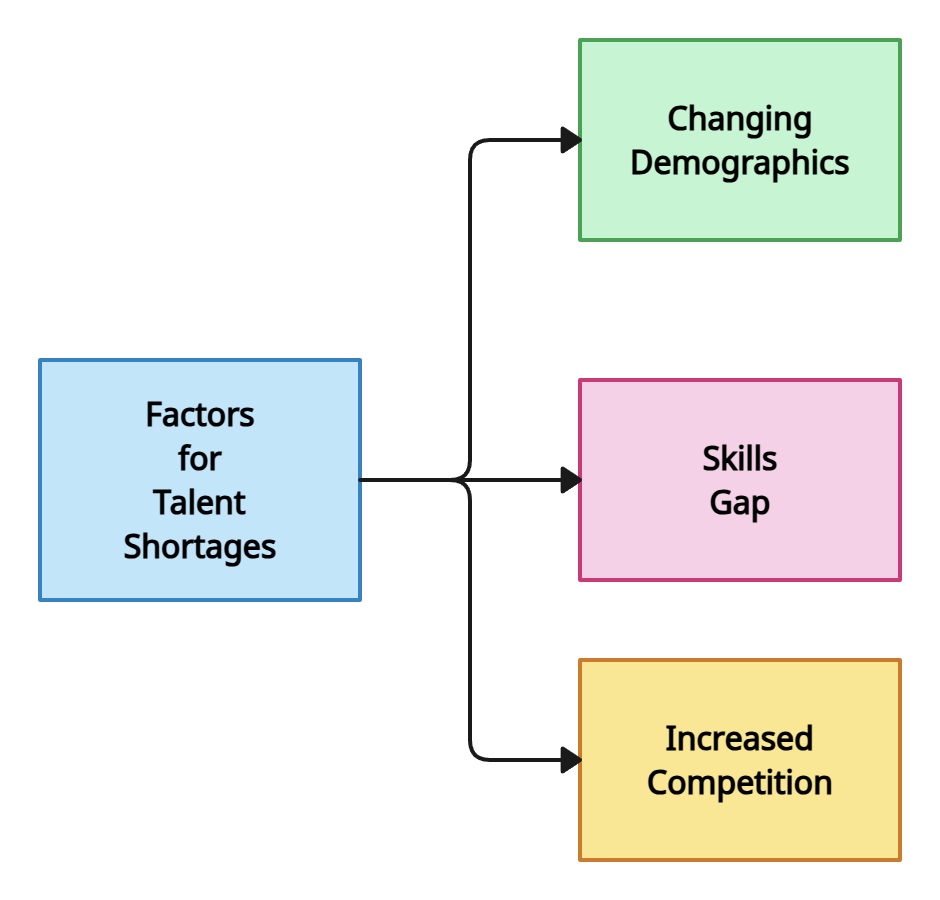
Tech hiring has evolved dramatically. Once simple, roles now blend multiple disciplines, demanding expertise in AI, machine learning, and cybersecurity. This shift creates high demand for rare, specialized skills. Education struggles to keep up, leaving a gap between graduate skills and industry needs. Companies scramble for talent that's in short supply. The talent hunt is now global, with multinationals competing across borders. Workers seek more than just high pay; they want flexibility, growth, and purpose. Remote work intensifies competition, giving skilled professionals more choices.
Companies must offer both competitive pay and standout work environments. Skills obsolescence is a major challenge. In tech, skills have a 2.5-year half-life, necessitating continuous learning. Companies neglecting reskilling and upskilling risk falling behind, widening the talent gap. This new landscape demands innovative approaches to talent acquisition, development, and retention to stay competitive in a rapidly changing tech industry. Figure 1 shows some of the common factors for talent shortage.
Figure 1: Some common factors for talent shortages

The Impact of Low-Quality Talent on Business Growth

Hiring mistakes can be disastrous for businesses. Inadequately skilled teams often lead to poor project execution, missed deadlines, and costly errors, especially in critical fields like software development and cybersecurity. Without the right talent, innovation suffers. Companies may stagnate, losing competitive edge and market opportunities. The impacts of bad hires extend beyond immediate issues, causing:

  • 1. Higher turnover rates
  • 2. Decreased employee morale
  • 3. Damaged reputation in the job market

Persistent hiring struggles can label a company as an undesirable workplace, further complicating talent acquisition. These long-term effects underscore the critical importance of effective hiring practices for business success and growth.

Choosing the Right Nearshore Partner

Nearshore outsourcing provides access to skilled professionals in nearby countries, offering cost savings, cultural alignment, and time zone compatibility for smoother collaboration. A quality nearshore partner connects businesses to diverse talent pools, finding the best fit across various tech roles. When selecting a partner, consider:

  • 1. Industry experience and specialization
  • 2. Global talent access, especially in regions like Latin America
  • 3. Cultural alignment with your company
  • 4. Technological capabilities for efficient talent management

The right partner addresses immediate hiring needs and provides long-term solutions to talent shortages. They act as a strategic ally in navigating the complex landscape of tech talent acquisition, offering both immediate relief and sustainable talent management strategies.

Technology to Find and Manage Talent Efficiently

AI has transformed recruitment by:
  • 1. Analyzing extensive data to find candidates matching both technical skills and company culture
  • 2. Streamlining the entire process from job posting to screening
  • 3. Significantly reducing hiring time

These AI tools efficiently process large amounts of information, enabling faster and more accurate candidate selection. They help companies identify suitable talent more effectively, aligning technical capabilities with organizational fit and accelerating the overall recruitment timeline.

Modern platforms simplify outsourced team management by:
  • 1. Tracking performance metrics
  • 2. Facilitating communication
  • 3. Ensuring smooth collaboration between in-house and external teams

These tools streamline the complexities of managing remote talent, making it easier to integrate outsourced professionals with internal teams and monitor their performance effectively.

Predictive analytics in hiring:
  • 1. Forecasts future talent needs using market trends and internal data
  • 2. Enables proactive talent acquisition
  • 3. Helps companies build a pipeline of qualified professionals

By anticipating demand, businesses can strategically prepare for future skill requirements, mitigating potential talent shortages before they become critical issues.

Long-Term Strategy for Sustainable Talent Acquisition

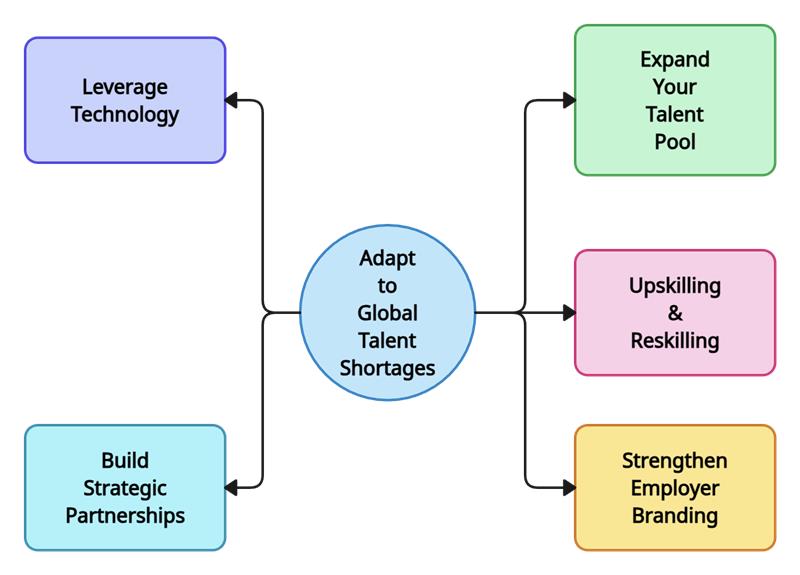
To combat talent shortages, companies should prioritize continuous education, encouraging employees to engage in training, certifications, and hackathons. This approach enhances skills, boosts morale, and improves retention. Cross-training employees in multiple roles fosters adaptability and reduces disruptions during vacancies. Additionally, partnering with educational institutions, bootcamps, and community organizations helps create tailored talent pipelines, ensuring a steady flow of candidates trained to meet specific company needs. These strategies not only address immediate skill gaps but also build a more versatile and future-ready workforce. Figure 2 shows some of the key strategies to overcome the global talent shortage challenges.
Figure 2: Strategies to overcome global talent shortage challenges.

Thriving Despite the Talent Challenge

Tackling the skilled labor shortage demands a strategic, forward-thinking approach. Organizations that leverage nearshore outsourcing, embrace technological solutions, and prioritize ongoing employee development are more likely to thrive in the challenging landscape created by the talent deficit. By combining these strategies, companies can build resilience against the current shortage and prepare for future workforce needs.
This multifaceted approach allows businesses to:
  • 1. Access a broader talent pool through nearshore partnerships
  • 2. Streamline recruitment and workforce management with advanced technologies
  • 3. Cultivate internal talent through continuous learning and upskilling initiatives
Such a comprehensive strategy not only addresses immediate staffing challenges but also fosters a dynamic and adaptable workforce capable of navigating the evolving demands of the tech industry. In essence, companies that proactively tackle the talent shortage through these means are better equipped to maintain their competitive edge and drive innovation in an increasingly skills-driven market.

References

1. Díaz, V. M. (2024, December 1). Overcoming the talent shortage: Nearshore outsourcing strategies. Vanguard X.
2. Management Solutions International (MSI). (2024, November 13). Adapting to global talent shortages: Strategies for businesses.

Author

Shahab Anbarjafari
Senior Director, AI Engineering