The Future of Work
AI, Automation, and the Changing Workforce Dynamics

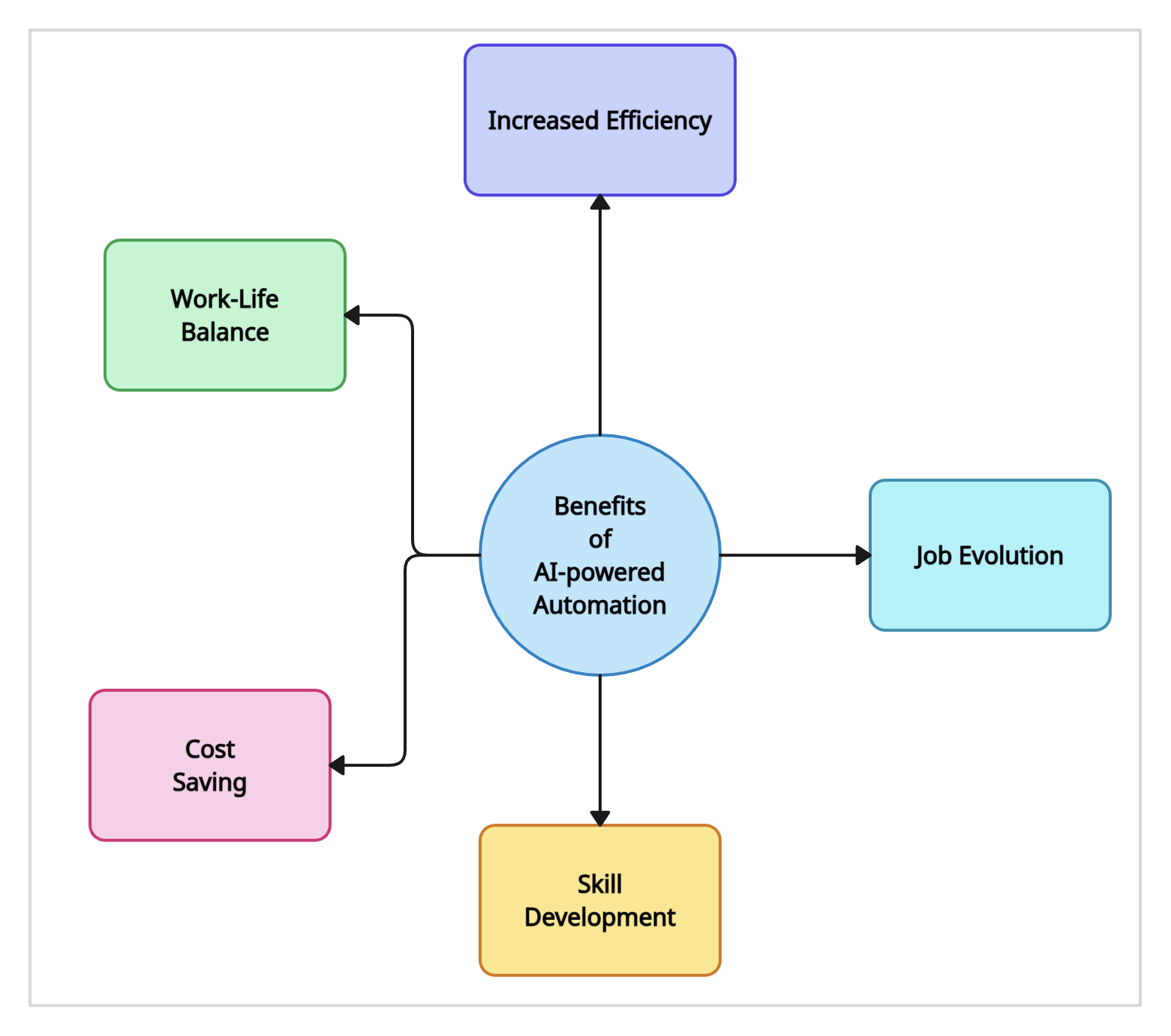
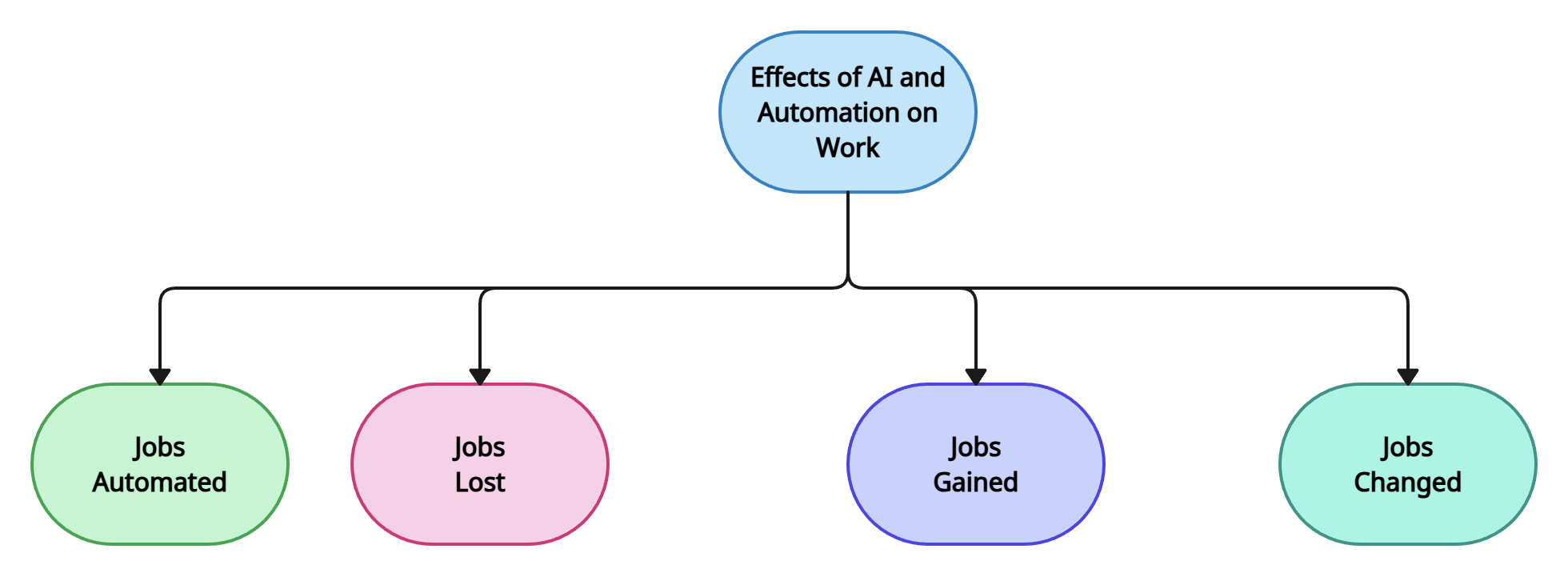
Analysis of over 2000 work activities across 800+ occupations reveals varying automation potential. Physical tasks in predictable environments, data collection, and processing are highly automatable, comprising about half of all work activities. Management, expertise provision, and stakeholder interaction are less susceptible. While automation will impact nearly all occupations, only 5% could be fully automated with current technology. However, 30% of activities in 60% of occupations have automation potential. Consequently, most workers across various fields will collaborate with evolving machines, likely altering the nature of their occupations.
Automation's impact on workforce displacement varies widely based on adoption scenarios. In our midpoint projection for 2016-2030, about 15% of the global workforce (400 million workers) could be displaced. The fastest scenario estimates 30% displacement (800 million workers), while the slowest projects nearly zero displacement (10 million workers). Factors influencing adoption include technical feasibility, deployment costs, labor market dynamics, business benefits, and social acceptance. Displacement rates will differ across countries and sectors, with advanced economies potentially facing 20-25% workforce displacement by 2030, significantly higher than in developing countries like India. This variation is largely due to differences in wage levels and labor market conditions.
Despite job displacement due to automation, overall labor demand is projected to grow. Scenarios based on factors like rising incomes, increased healthcare spending, and investments in infrastructure, energy, and technology suggest an increase of 21-33% in global workforce demand (555-890 million jobs) by 2030, offsetting job losses. Emerging economies like India, with growing working-age populations, are expected to see significant gains. Additional job creation will come from economic growth, business dynamism, and productivity increases. Historically, technology has been a net job creator, as seen with the personal computer's introduction, which generated millions of jobs across various sectors. New, currently unimagined occupations may account for up to 10% of jobs created by 2030, based on historical trends.
The future workplace will increasingly feature partial automation, with machines supporting human workers rather than fully replacing them. This trend is evident across various sectors. In healthcare, AI algorithms capable of accurately interpreting diagnostic scans will assist doctors in diagnosis and treatment planning, enhancing rather than replacing human expertise. In other industries, roles involving repetitive tasks are evolving into positions focused on managing and troubleshooting automated systems. A prime example is seen at Amazon, where former manual laborers responsible for lifting and stacking items are transitioning to roles as robot operators. These employees now oversee automated arms and address operational issues, such as disruptions in the flow of objects. This shift exemplifies how automation is changing job roles, often requiring workers to develop new skills in technology management and problem-solving.